
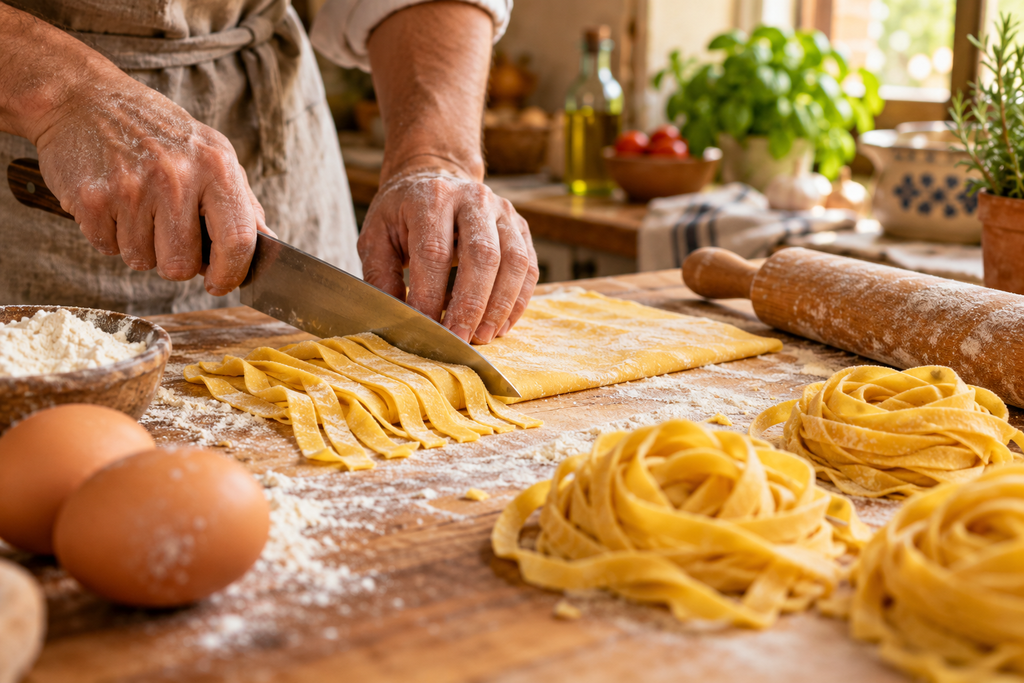
Handmade pasta comes together through mixing, kneading, resting, rolling, and shaping dough before cooking. Each stage influences the finished texture, from the dough’s flexibility to the thickness of ribbon. Behind these simple steps lies judgment, knowing when to add flour, when to stop kneading, and when the dough needs more time.
What Ingredients Go into Handmade Pasta?
Fresh egg pasta begins with flour and eggs, although ingredients vary by recipe and tradition. Other pasta styles use flour and water. The intended shape helps determine which dough a cook chooses.
Measurements provide a starting point, but texture matters too. In chef Barbara Lynch’s fresh pasta method, published by the James Beard Foundation, flour requirements can change with the eggs, flour, and weather. The aim is a cohesive dough rather than forcing every measured ingredient into the mixture.
Why Kneading and Resting Matter
Kneading brings the ingredients into a smoother, more uniform dough. As the cook folds and presses, the rough mixture gradually becomes easier to handle. Attention to consistency matters more than working quickly. Resting follows kneading. Keeping pasta dough covered protects its surface from drying during this pause. King Arthur Baking’s pasta-making recipe includes a rest before rolling, making patience part of the method. For anyone learning the craft, this stage offers a useful lesson: watch how the dough behaves. If rolling becomes difficult, pause and reassess instead of repeatedly forcing the dough thinner.
How Handmade Pasta Gets Its Shape
Rolling transforms a compact piece of dough into sheets. A rolling pin offers control, while a pasta machine helps create thinner sheets. Working with smaller portions makes the process manageable. Once rolled, sheets can become ribbons or form the base for filled pasta. Baking describes both hand-rolling and machine-rolling methods. Tools can support the process, while the cook still controls thickness, handling, and shape. Consistency matters more than perfection. Uneven sheets can leave thicker sections needing more cooking time. For filled shapes, careful sealing also helps keep the filling enclosed.
Bringing Pasta and Sauce Together
The final dish depends on how pasta and sauce work together. Delicate ribbons call for a different approach from sturdy tubes or filled shapes. Consider thickness, texture, and filling before choosing a sauce.
For a contrasting pairing, our article on Spicy Penne Vodka explores a creamy, tomato-based favorite. The comparison highlights how different pasta shapes contribute to the eating experience without suggesting every variety uses the same dough or preparation.
Appreciating the Care Behind Every Batch
Handmade pasta rewards patience throughout the process. Small decisions about moisture, resting, and thickness become noticeable on the plate. The craftsmanship lies in responding to the dough rather than treating each batch as identical.
Understanding these steps adds another layer of enjoyment to an Italian meal. When planning your next visit, explore Sac’s Place and ask about current pasta selections and preparation methods. Knowing the process gives diners questions to ask and a deeper appreciation of the finished dish.