
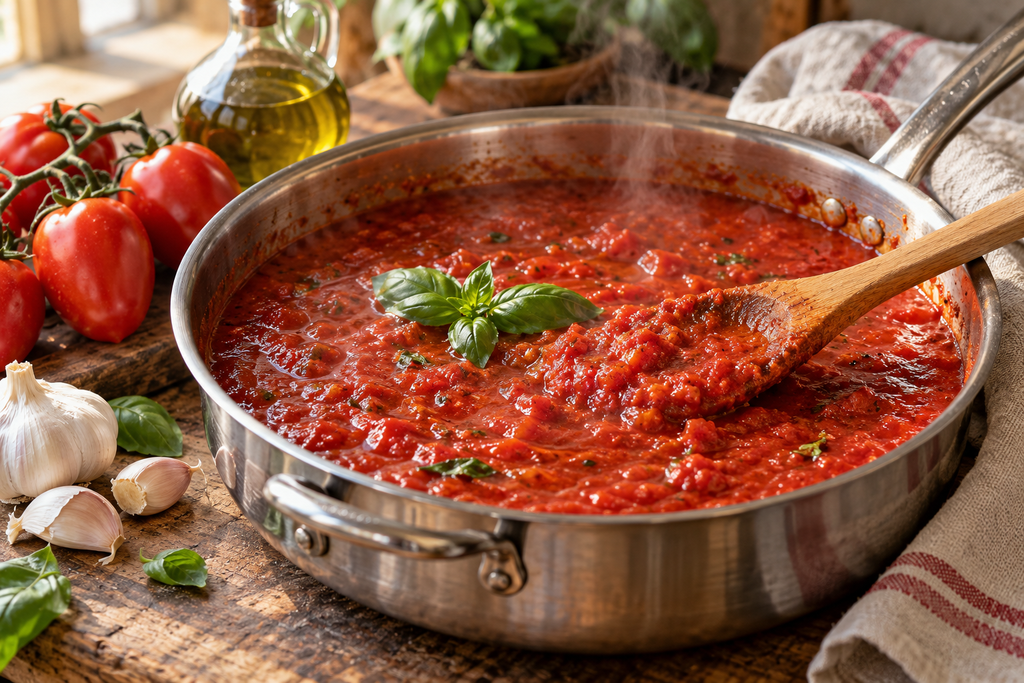
A great Italian tomato sauce depends on how its ingredients work together. Tomatoes provide the foundation, aromatics add depth, and herbs contribute fragrance. Cooking time and seasoning then shape the finished flavor. The secret is thoughtful preparation: choosing suitable ingredients, controlling the heat, and tasting as the sauce develops.
Start With the Tomatoes
Before adding anything to the pan, consider the tomatoes themselves. Their flavor and texture influence the sauce, so taste them before deciding how much seasoning to use.
Think about the result you want. A rustic sauce can retain small pieces of tomato, while a smoother preparation may suit a more even coating. Choosing the texture deliberately gives the dish a clearer direction.
For more background, the restaurant’s article explains how sauce influences familiar Italian dishes, from pasta to pizza. Understanding that relationship helps you choose a preparation that complements the meal.
Build Flavor With Aromatics
Garlic and onion can support the tomato flavor, but they do not need to appear in every recipe. Choose a combination that suits the sauce rather than adding ingredients automatically.
A tested recipe for a quick Italian-American red sauce demonstrates how garlic, olive oil, and tomatoes can form a flavorful base without hours of cooking. It offers one approach for a relatively quick preparation.
When cooking aromatics, pay attention to the heat and aroma. This stage deserves care before the tomatoes enter the pan.
Use Herbs With Purpose
Herbs should complement the sauce’s character. Begin with a modest amount, taste, and decide whether the preparation needs more. In Italian cooking, a restrained approach can help you appreciate the ingredients individually. Rather than combining every herb available, choose a clear direction for the dish. Also consider what will accompany the sauce. Cheese, vegetables, meat, and other toppings contribute their own flavors, so the sauce does not have to supply every element.
Match Cooking Time to the Sauce
Longer cooking is not automatically the right choice for every Italian tomato sauce. A quick preparation and a slowly cooked sauce serve different purposes. For a richer style, a recipe for slow-cooked tomato sauce uses extended oven cooking to develop concentration and browned flavors. That approach creates a different result from a quick stovetop sauce. Choose your method according to the meal. During cooking, check the consistency and stir as needed instead of relying on the clock alone.
Taste for Balance
Before serving, ask three simple questions: does the sauce taste pleasantly of tomatoes, is the seasoning appropriate, and does the texture suit the dish? Make small adjustments and taste again. Remember that the finished meal may include salty cheese or seasoned toppings, which can change how the sauce tastes alongside them. Try a little sauce with the food it will accompany. This gives you a more useful impression than tasting it on its own.
Let the Sauce Complement the Meal
With pasta, consider how evenly the sauce coats each bite. On pizza, think about its balance with the dough, cheese, and toppings. The aim is a complete dish in which the components work together.
This attention to balance is part of what makes Italian cooking rewarding. A familiar preparation can offer plenty to appreciate when you notice its texture, seasoning, and ingredient relationships.
Explore Italian Flavors at Sac’s Place
At Sac’s Place in Astoria, the restaurant highlights daily-made tomato sauce alongside handmade pasta and coal-brick oven pizza.
Explore the current menu and notice how the sauce contributes to your chosen dish. Whether cooking at home or dining out, appreciating Italian tomato sauce begins with paying attention to the ingredients and the way they come together.