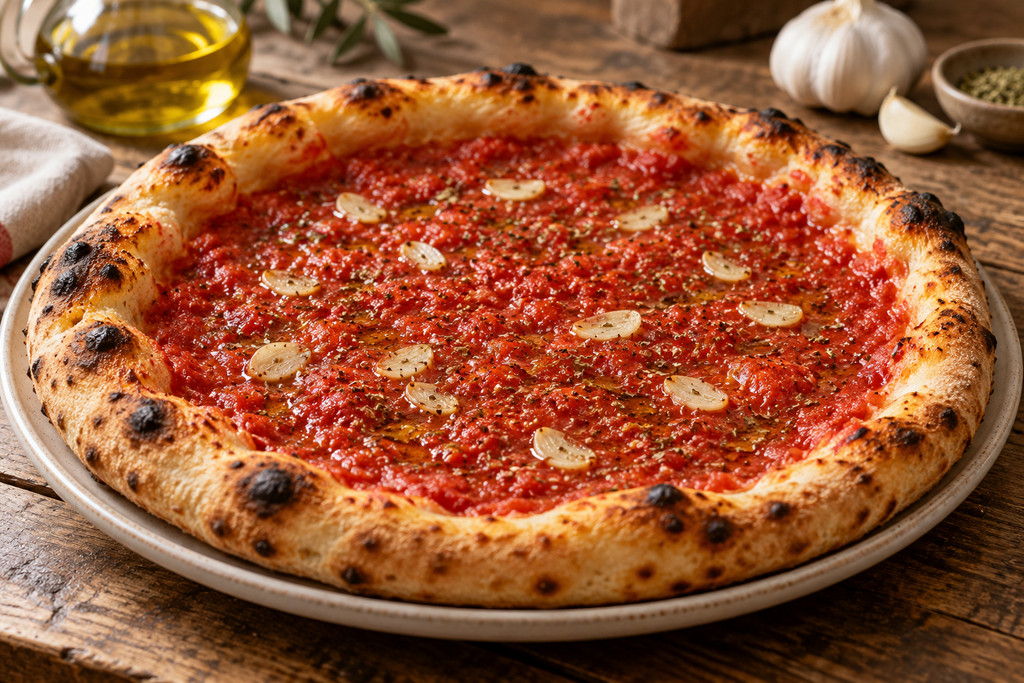
Marinara pizza topped with tomato sauce, sliced garlic, oregano, and olive oil on a golden, lightly charred crust.

Marinara Pizza Explained: Why Cheese Isn’t Always Necessary

Marinara pizza shows how satisfying pizza can be without cheese. Its classic topping combines tomatoes, garlic, oregano, and olive oil, allowing the dough and tomato flavor to take center stage. Rather than feeling incomplete, this traditional style offers a different balance: fragrant seasoning, a flavorful base, and a crust worth appreciating in its own right. 

Marinara Pizza Explained: Why Cheese Isn’t Always Necessary Read Post »
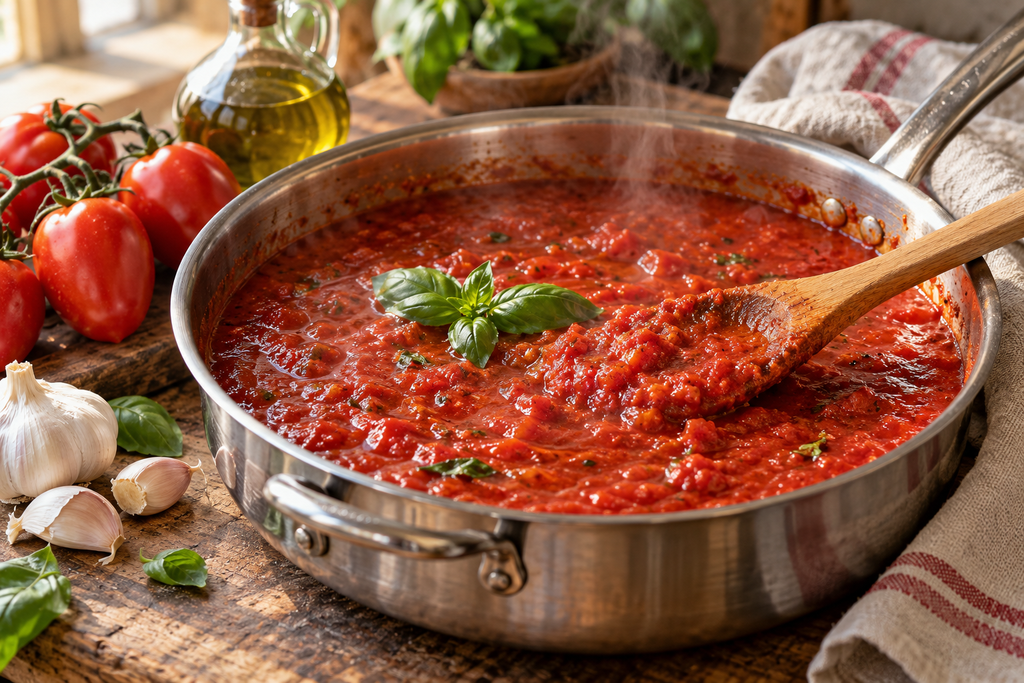
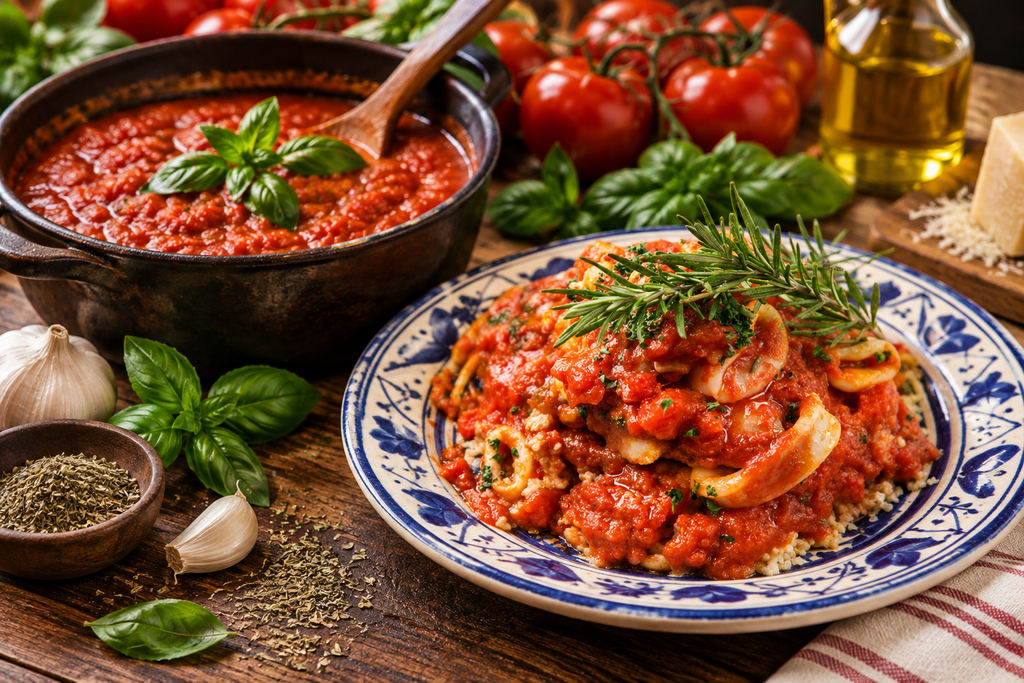
Homemade tomato sauce with fresh tomatoes, basil and rigatoni pasta

Homemade Tomato Sauce: Why It Changes an Italian Dish

Homemade tomato sauce can influence the flavor, texture, and balance of many Italian dishes. Tomatoes provide natural sweetness and acidity, while aromatics, herbs, seasoning, and careful cooking can add depth to the finished sauce. From pasta to pizza, a well-prepared sauce can bring different ingredients together without overpowering them. What Makes Freshly Prepared Sauce Different?

Homemade Tomato Sauce: Why It Changes an Italian Dish Read Post »

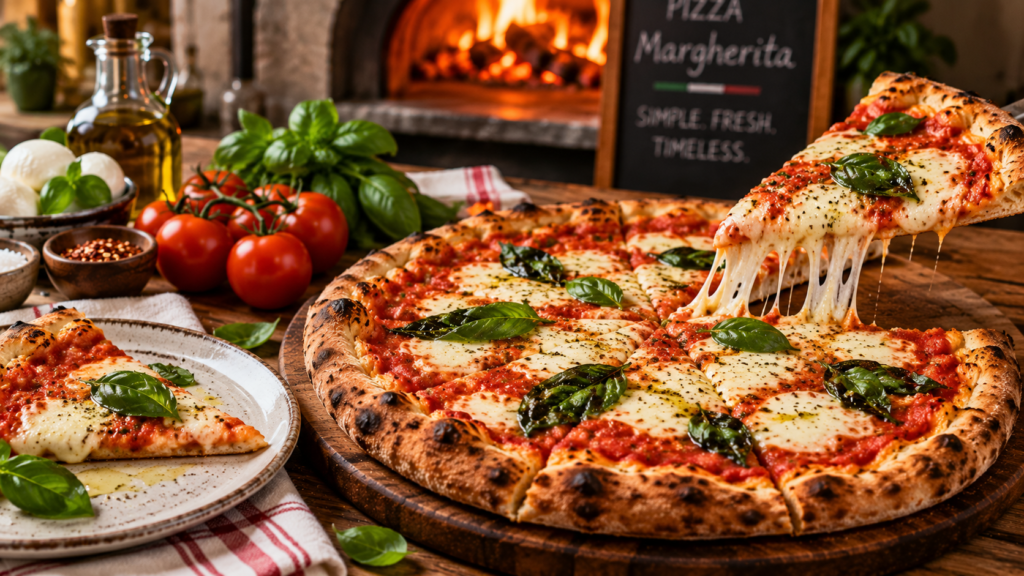
Margherita pizza with tomato sauce, melted mozzarella, fresh basil and a crisp Italian-style crust

What Makes a Great Margherita Pizza?

A Margherita pizza shows how a few simple ingredients can create a distinctive Italian dish. Tomato, mozzarella, dough, and careful preparation work together to create a balance of flavor and texture. Because there are relatively few components, the quality and preparation of each one can have a noticeable effect on the finished pizza. What Defines

What Makes a Great Margherita Pizza? Read Post »

Scroll to Top