
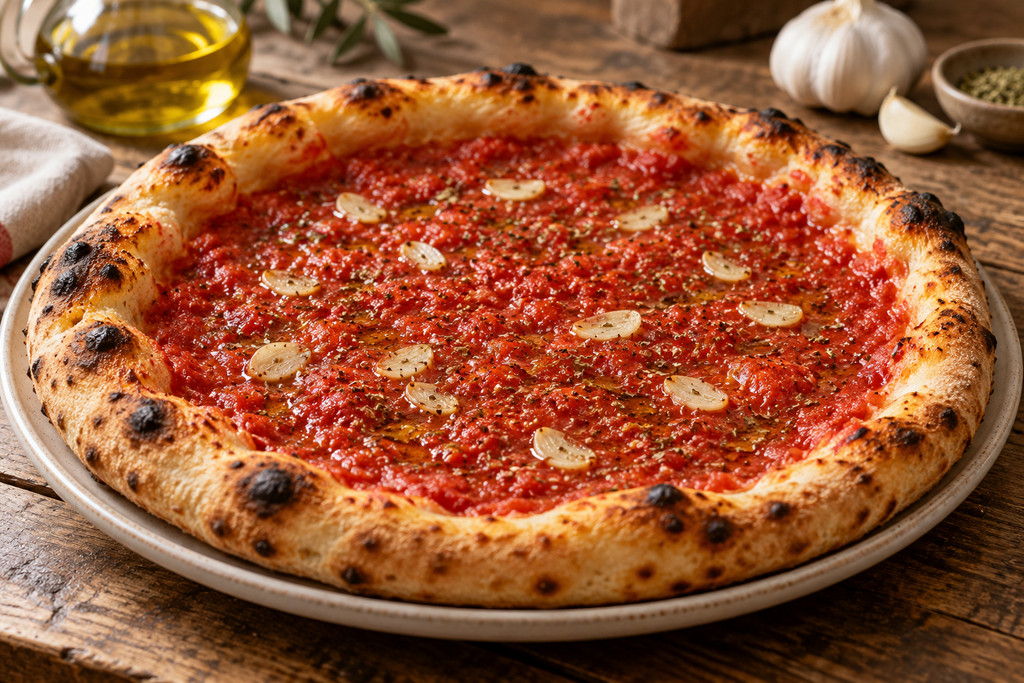
Marinara pizza shows how satisfying pizza can be without cheese. Its classic topping combines tomatoes, garlic, oregano, and olive oil, allowing the dough and tomato flavor to take center stage. Rather than feeling incomplete, this traditional style offers a different balance: fragrant seasoning, a flavorful base, and a crust worth appreciating in its own right.
Marinara pizza proves that cheese is not essential to a satisfying pizza. This classic Neapolitan style combines tomatoes, garlic, oregano, and olive oil, giving the dough and sauce room to shine. Its appeal comes from balance: a flavorful tomato base, fragrant seasoning, and a well-prepared crust working together in every bite.
What Is Marinara Pizza?
Marinara is a traditional cheese-free pizza associated with Naples. Its simple topping allows each ingredient to remain noticeable, making it a distinctive choice for diners who enjoy tomato-forward flavors.
The classic marinara topping brings together tomato sauce, thinly sliced garlic, oregano, and olive oil. Despite its name, the traditional preparation does not include seafood. With fewer toppings, the relationship between the bread and sauce becomes central to the experience.
Why Cheese Isn’t Always Necessary
Cheese brings richness to many pizza styles, but marinara achieves its character through a different combination. Tomatoes provide the foundation, garlic adds aroma, and oregano contributes herbal flavor.
Without a layer of mozzarella, these ingredients are easier to appreciate individually. The crust also becomes more noticeable, encouraging diners to pay attention to its texture alongside the topping.
This simplicity is part of established Neapolitan pizza traditions, where marinara holds its own place among the classic styles.
Tomatoes Take Center Stage
The tomato base plays a leading role in marinara pizza. Its flavor should complement the dough, while its consistency should allow an even layer across the center.
A balanced topping leaves room to enjoy the crust. Too much sauce can dominate the bite, while too little may leave the pizza feeling uneven.
The appeal of tomato paired with bread is familiar in other preparations, too. Warm garlic knots dipped in marinara sauce offer another way to enjoy that combination, although a dipping sauce and a pizza topping may follow different recipes.
Garlic, Oregano, and Olive Oil Add Character
Marinara’s short ingredient list gives its seasoning an important role. Garlic contributes a recognizable aroma, oregano adds an herbal note, and olive oil completes the traditional topping. The ingredients should work together. A strong garlic flavor can be enjoyable, but it should still leave room for the tomato and bread. Classic marinara uses oregano and garlic, while Margherita pairs its tomato base with mozzarella and basil. These combinations give the two pizzas distinct identities.
Great Dough Makes a Difference
With no cheese covering the center, the pizza’s base deserves particular attention. Notice the texture beneath the sauce, the character of the rim, and how the crust supports each bite. Try a piece that includes both the topped center and the outer edge. This gives you a fuller impression of how the dough and seasoning come together. Preferences vary: some diners enjoy a softer crust, while others favor more crispness. What matters is whether the preparation feels balanced and pleasant to eat.
Marinara or Margherita: Which Should You Choose?
Marinara pizza suits diners who want tomatoes, garlic, and oregano at the forefront. Margherita offers a different experience, with mozzarella and basil contributing to the flavor and texture. Neither needs to replace the other. Comparing them can reveal how a small change in ingredients creates a noticeably different pizza. If you usually choose cheese-heavy toppings, marinara offers a straightforward way to explore the dough and tomato base more closely.
Explore Pizza at Sac’s Place in Astoria
At Sac’s Place, homemade dough, daily-made tomato sauce, and coal-brick oven pizza reflect the restaurant’s emphasis on family cooking traditions. These elements provide a starting point for appreciating how the base and topping shape a pizza.
Check the current menu and ask whether a marinara-style preparation is available. When choosing your next pizza, take a moment to notice the crust, sauce, and seasoning; you may discover how satisfying a simple combination can be.